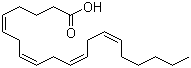
Arachidonic acid (ARA), chemically designated all-cis-5,8,11,14-eicosatetraenoic acid, is a naturally occurring polyunsaturated fatty acid with the molecular formula C20H32O2. It belongs to the omega-6 (n-6) family of fatty acids and is one of the principal long-chain polyunsaturated fatty acids found in animals. Although present in relatively small amounts compared with common dietary fats, arachidonic acid occupies a central position in biochemistry because it serves both as a structural component of cell membranes and as the precursor of numerous biologically active signaling molecules.
The name "arachidonic acid" reflects its historical connection with peanut (*Arachis hypogaea*) lipids, from which related fatty acid fractions were first investigated in the late nineteenth and early twentieth centuries. Subsequent research showed that arachidonic acid is distributed widely in animal tissues, particularly in phospholipids of cell membranes, and is not unique to peanuts. As analytical techniques advanced, the compound emerged as one of the best-studied polyunsaturated fatty acids in biological chemistry.
Interest in arachidonic acid increased dramatically during the second half of the twentieth century with the discovery that it is the immediate precursor of prostaglandins, thromboxanes, leukotrienes, and many other eicosanoids. These lipid mediators regulate inflammation, immune responses, blood clotting, vascular tone, pain perception, smooth muscle contraction, and numerous other physiological processes. The recognition of this pathway transformed arachidonic acid from a relatively obscure membrane lipid into one of the most intensively studied molecules in biomedical science.
Within cells, arachidonic acid is normally esterified in membrane phospholipids rather than existing in free form. When cells are stimulated by injury, infection, or other physiological signals, phospholipase A2 releases arachidonic acid from the membrane. It is then converted through cyclooxygenase, lipoxygenase, or cytochrome P450 pathways into a diverse family of signaling molecules that coordinate local and systemic biological responses. The elucidation of these pathways provided the biochemical basis for understanding the actions of aspirin and many other nonsteroidal anti-inflammatory drugs.
Beyond inflammation, arachidonic acid plays essential roles in normal growth and development. It contributes to membrane fluidity, cellular signaling, and nervous system function, and it is particularly abundant in the brain, liver, and skeletal muscle. During fetal and infant development, adequate arachidonic acid is considered important for neural development, visual function, and overall growth. Consequently, arachidonic acid is commonly added, together with docosahexaenoic acid (DHA), to infant formula in many countries to more closely resemble the fatty acid composition of human milk.
Commercial production has evolved considerably over the past several decades. While arachidonic acid was once obtained mainly from animal tissues, modern manufacturing increasingly relies on microbial fermentation using selected fungi, especially species of *Mortierella*. Fermentation technology has enabled high-purity production suitable for nutritional, pharmaceutical, and research applications while reducing dependence on animal-derived raw materials.
Today, arachidonic acid continues to attract attention in nutrition, neuroscience, immunology, and cardiovascular research. Scientists are investigating not only its classical role in inflammation but also its involvement in brain development, exercise physiology, metabolic regulation, and chronic disease. At the same time, research has emphasized that its physiological effects depend on the balance among dietary fatty acids rather than on arachidonic acid alone, highlighting the importance of overall lipid metabolism.
From a historical perspective, arachidonic acid exemplifies how advances in analytical chemistry, physiology, and molecular biology can transform a naturally occurring fatty acid into a cornerstone of modern biomedical science. Its journey from a membrane constituent to the precursor of an entire family of signaling molecules has profoundly influenced our understanding of human health and disease.
**References**
1. Bergström, S., Danielsson, H. and Samuelsson, B. (1964) 'The enzymatic formation of prostaglandins from arachidonic acid', *Biochimica et Biophysica Acta*, 90, pp. 207–210.
2. Smith, W.L., Murphy, R.C. and Marnett, L.J. (2000) 'Prostaglandin biosynthesis and biological actions', *Journal of Biological Chemistry*, 275(44), pp. 32879–32882.
3. Calder, P.C. (2015) 'Marine omega-3 fatty acids and inflammatory processes: Effects, mechanisms and clinical relevance', *Biochimica et Biophysica Acta*, 1851, pp. 469–484. (Provides context for the biological relationship between omega-6 arachidonic acid and omega-3 fatty acids.)
|





 GHS07 Warning Details
 chemBlink Chemical Story